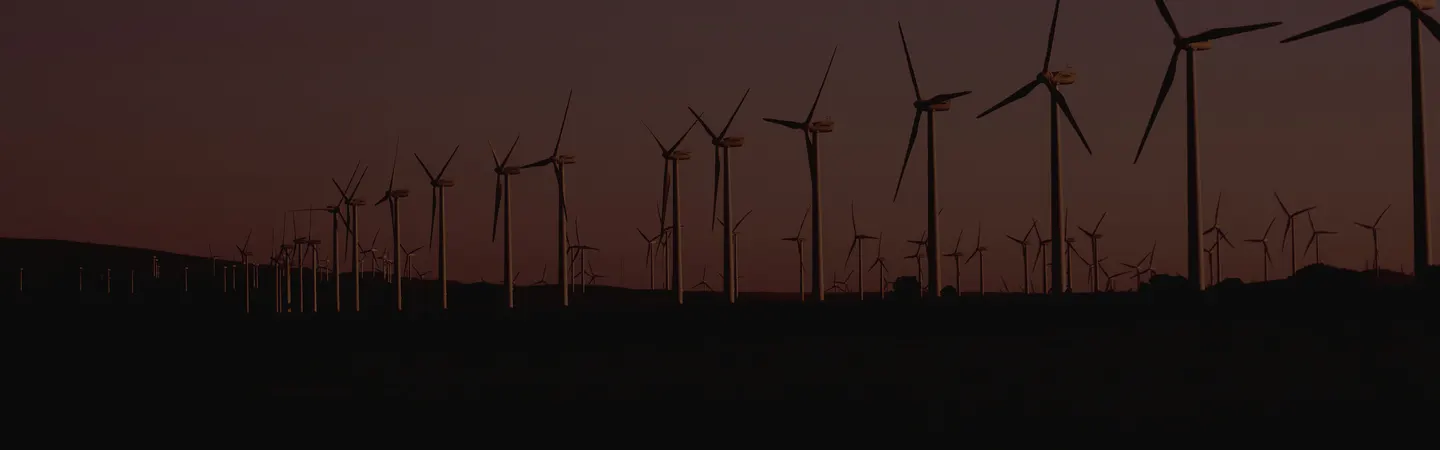
A little under 20% of the electricity generated in the EU comes from wind power. EU installed wind power capacity, was 231 GW in 2024, up 12 GW or 5% year-on-year. Sweden, Finland and Denmark stand out as the countries with the highest shares of per capita wind deployment; Spain, the UK and Germany lead in absolute deployment.
Europe has long been a leader for wind manufacturing capacity, with countries including Germany, Denmark and Spain driving the industry forward particularly since the early 2000s. Compared to domestic demand, Europe has healthy supply capacity across the production of wind nacelles, blades, foundations and towers.
The EU is a net exporter of wind technologies. In 2024, exports of €2.8 billion were offset by imports of €0.5 billion, leaving a net export position of €2.3 billion. Denmark has the largest exports of any European country at €2 billion. The largest export partners of the EU are the UK, US, Japan and Turkey. In 2024, notable imports were from India and China.
The wind sector is the largest clean technology employer (recorded in the Prognos dataset) with 274,000 EU jobs by 2023. Employment has expanded steadily from 89,000 jobs in 2010 with growth in almost all recorded years. Germany stands out as the largest absolute employer, followed by France, whilst Denmark has the largest share when considered as a percentage of all jobs, followed by Lithuania. A little under 80% of wind sector jobs are in the operation of wind plants.
Wind patenting grew strongly in the 2000s, but global patent families have declined since their peak around 2010. Europe remains the largest source of wind patenting in the dataset, accounting for around half of global patent families in 2024. China is now the second-largest region, while the United States, South Korea and Japan record smaller volumes than in the early 2010s. Recent patenting is led by offshore wind turbines, followed by vertical-axis turbines and power conversion technologies.